
Every time you unlock your phone using facial recognition, ask a smart speaker to play music, or receive a real-time traffic update, data is being collected and processed. Traditionally, much of this information would be sent to a distant cloud server for analysis before the result was returned to your device.
However, as technology becomes faster and more connected, waiting for information to travel to a remote data centre is not always practical. Autonomous vehicles, industrial machines, healthcare devices, security cameras, and smart cities often need to process information almost instantly.
That is where edge computing comes in.
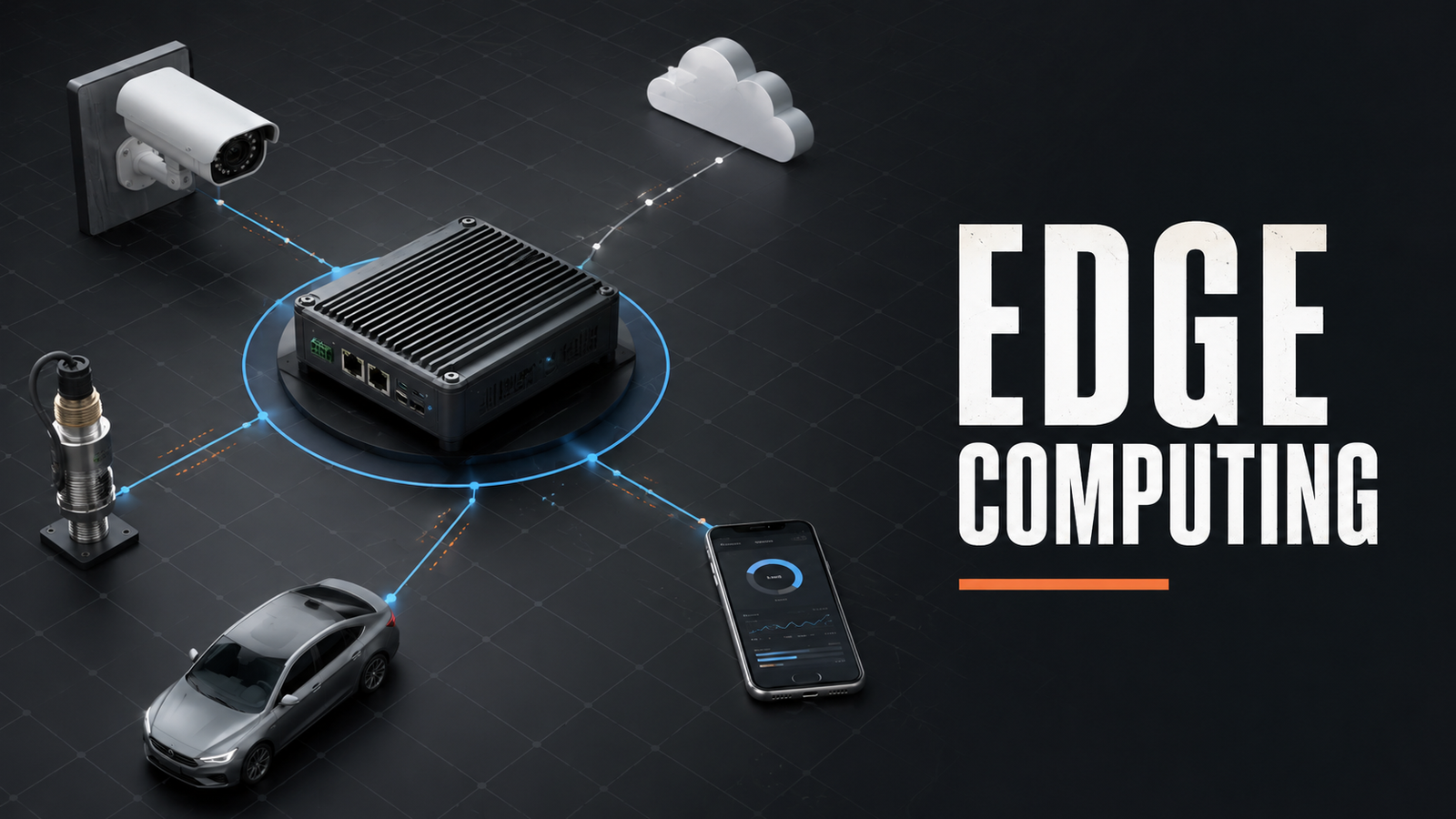
Edge computing brings data processing closer to the location where the data is generated. Instead of sending every piece of information to a central cloud server, devices can analyse and act on data locally or through a nearby computing system.
This approach can improve speed, reduce bandwidth usage, enhance privacy, and make connected technologies more reliable. But how exactly does edge computing work, and why is it becoming so important?
Let’s break it down.
What Is Edge Computing?
Edge computing is a technology model in which data is processed close to its source instead of being sent entirely to a distant cloud or central data centre.
The “edge” refers to the outer edge of a network, where devices such as smartphones, sensors, cameras, machines, vehicles, and Internet of Things devices generate information.
For example, consider a security camera using artificial intelligence to detect unusual movement. In a traditional cloud-based system, the camera may continuously upload video footage to a remote server. The server analyses the video and sends an alert if it detects something suspicious.
With edge computing, the camera—or a nearby edge device—can analyse the footage locally. It only sends an alert or relevant video clip when something important happens.
As a result, less data needs to travel across the internet, and the system can respond more quickly.
How Does Edge Computing Work?
Edge computing works by placing computing resources closer to connected devices and data sources.
A basic edge computing system usually involves three layers:
1. Edge Devices
Edge devices are the technologies that collect or generate data. These may include:
- Smartphones
- Smartwatches
- Security cameras
- Industrial sensors
- Medical monitoring devices
- Autonomous vehicles
- Smart home appliances
- Retail point-of-sale systems
Some edge devices can process data independently. Others send information to a nearby edge server or gateway.
2. Edge Gateways or Local Servers
An edge gateway acts as a connection point between devices and the cloud. It can collect, filter, process, and store information from multiple devices.
For instance, a manufacturing facility may have hundreds of sensors monitoring temperature, vibration, pressure, and machine performance. Instead of sending every sensor reading to the cloud, a local edge server can analyse the information and identify potential equipment failures.
Only the most valuable information may then be transferred to the central cloud platform.
3. The Cloud or Central Data Centre
Edge computing does not necessarily replace cloud computing. In many cases, the two technologies work together.
The edge handles immediate processing and time-sensitive decisions, while the cloud handles tasks requiring greater storage capacity, long-term analysis, system-wide insights, or complex computing power.
A smart factory, for example, may use edge computing to stop a malfunctioning machine immediately. It may then upload performance data to the cloud so managers can study long-term trends.
Edge Computing vs Cloud Computing
Edge computing and cloud computing differ primarily in where data is processed.
In cloud computing, data is usually transferred to a centralised server managed by a company or cloud service provider. The cloud offers substantial computing power, scalable storage, and access from different locations.
In edge computing, some or all processing takes place closer to the device producing the data.
Here is a simple comparison:
| Factor | Edge Computing | Cloud Computing |
|---|---|---|
| Data processing | Near the device or data source | In a remote data centre |
| Response time | Usually faster | Can be affected by network latency |
| Internet dependency | Lower for local tasks | Usually requires stable connectivity |
| Data storage | Limited or distributed | Large and centralised |
| Best suited for | Real-time and local processing | Large-scale storage and analysis |
| Bandwidth usage | Lower | Potentially higher |
The choice is not always between edge and cloud computing. Many modern technology systems use both.
The edge can make immediate decisions, while the cloud provides central coordination, software updates, advanced analytics, and long-term storage.
Key Benefits of Edge Computing
Businesses and technology providers are adopting edge computing because it addresses several limitations of fully centralised systems.
Faster Response Times
One of the biggest advantages of edge computing is reduced latency.
Latency is the delay between sending information and receiving a response. Even a short delay can create problems in technologies that require immediate action.
An autonomous vehicle cannot afford to wait for a distant cloud server before responding to an obstacle. Similarly, an industrial safety system must react instantly when it detects a dangerous condition.
By processing data locally, edge computing can deliver faster responses.
Reduced Bandwidth Usage
Connected devices can generate enormous amounts of data. Uploading all of it to the cloud may consume considerable network bandwidth and increase operating costs.
Edge computing allows systems to filter information before sending it elsewhere. Irrelevant or repetitive data can be discarded, while important information is transferred to the cloud.
A security camera, for example, does not always need to upload hours of empty footage. It may only need to send clips containing motion or unusual activity.
Improved Reliability
Cloud-based systems can become unavailable when internet connectivity is weak or interrupted.
Edge-enabled devices may continue performing essential functions even without a constant cloud connection. Once connectivity returns, the device can synchronise relevant information with the central system.
This capability is particularly valuable in factories, farms, remote areas, ships, construction sites, and other environments where network access may be inconsistent.
Better Data Privacy
Some information is too sensitive to be transmitted unnecessarily.
Healthcare data, biometric information, financial records, and private video footage may be safer when processed locally. Edge computing can reduce the amount of raw data leaving a device or physical location.
However, edge computing does not automatically guarantee privacy. Businesses must still secure devices, encrypt sensitive information, control access, and regularly update their systems.
Greater Operational Efficiency
Edge computing can help organisations respond to problems before they become more serious.
Sensors installed on industrial equipment can monitor performance and identify signs of failure. Retailers can analyse customer traffic inside stores. Logistics companies can track vehicles and adjust routes. Energy providers can monitor equipment across distributed locations.
By processing this information closer to where it is produced, organisations can make faster and more informed decisions.
Real-World Examples of Edge Computing
Edge computing is already present in many technologies, even when users do not realise it.
Autonomous and Connected Vehicles
Modern vehicles use cameras, radar, sensors, and onboard computers to understand their surroundings.
These systems need to process information quickly. A vehicle cannot send every observation to the cloud and wait for driving instructions. Local computing allows it to identify road markings, detect pedestrians, monitor blind spots, and respond to changing conditions.
Cloud platforms may still be used for navigation updates, software improvements, traffic analysis, and fleet management.
Smart Manufacturing
Manufacturing equipment produces continuous streams of operational data.
Edge systems can monitor machinery in real time and detect unusual vibration, overheating, pressure changes, or declining performance. This can help factories schedule maintenance before equipment fails.
It can also support automated quality checks by analysing images of products directly on the production line.
Healthcare Technology
Wearable devices and medical equipment can use edge computing to analyse patient information closer to where it is collected.
For example, a health-monitoring device may identify an unusual heart-rate pattern and immediately alert the user or healthcare provider. Processing critical information locally can reduce delays and limit the unnecessary transmission of sensitive data.
Edge computing should support—not replace—professional medical evaluation and secure healthcare systems.
Smart Homes
Smart thermostats, doorbells, speakers, lighting systems, and security devices frequently use some form of local processing.
A smart doorbell may analyse motion or recognise familiar faces without continuously uploading raw video. A thermostat can learn household patterns and adjust the temperature based on local data.
This can create faster, more private, and more reliable smart-home experiences.
Retail Stores
Retailers can use edge computing to manage inventory, analyse store traffic, support automated checkout systems, and personalise in-store experiences.
Cameras and sensors may detect when shelves need restocking or identify areas receiving the most customer attention. Local processing allows stores to act on this information without uploading every piece of raw data.
Smart Cities
Cities can use edge-enabled sensors to monitor traffic, air quality, energy consumption, public transport, and infrastructure.
A traffic-management system may adjust signals based on current road conditions. Rather than sending every vehicle movement to a central server, nearby computing systems can analyse traffic patterns and make faster decisions.
Agriculture
Connected farming equipment can monitor soil moisture, temperature, weather conditions, crop health, and animal movement.
Edge computing allows farmers to use these systems in remote locations where internet access may be limited. A local device could activate irrigation when soil becomes too dry without waiting for instructions from a cloud server.
Challenges of Edge Computing
Despite its advantages, edge computing also creates several challenges.
Security Across Multiple Devices
A central cloud environment can be easier to monitor than thousands of distributed devices. Every edge device may become a potential target for cyberattacks if it is not properly secured.
Organisations need strong authentication, encryption, software updates, access controls, and physical security.
Device Management
Managing a large network of edge devices can be complicated. Businesses must monitor performance, install updates, replace faulty hardware, and maintain compatibility across different systems.
The challenge becomes greater when devices are deployed across multiple cities, countries, factories, or remote locations.
Limited Computing Resources
Edge devices generally have less processing power and storage than large cloud data centres. They may not be suitable for every task, particularly highly complex analysis or long-term data storage.
Businesses must decide which tasks should happen locally and which should be handled in the cloud.
Initial Cost and Complexity
Setting up edge infrastructure may require new hardware, networking systems, software, and technical expertise.
Although edge computing can reduce bandwidth and operational costs over time, the initial implementation may be expensive for some organisations.
Does Edge Computing Replace the Cloud?
Edge computing is unlikely to replace cloud computing completely.
Instead, the two models complement each other.
Edge computing is useful for immediate decisions, local processing, privacy-sensitive information, and situations with limited connectivity. Cloud computing is better suited to large-scale storage, complex analytics, central management, and services shared across many locations.
A practical system might use edge computing to analyse data in real time and the cloud to study historical patterns.
For example, a factory may use an edge server to detect equipment problems instantly. At the same time, it may send summarised performance data to the cloud to compare productivity across several factories.
This hybrid approach allows organisations to benefit from both speed and scale.
The Future of Edge Computing
The importance of edge computing is likely to increase as more devices become connected.
Artificial intelligence, robotics, augmented reality, virtual reality, autonomous vehicles, smart infrastructure, and industrial automation all depend on rapid data processing. Sending every interaction to a distant data centre may not be efficient enough for these technologies.
Improvements in processors and specialised AI chips are also making smaller devices more capable. Tasks that once required powerful central servers can increasingly be performed on phones, cameras, vehicles, appliances, and local gateways.
The future of computing may therefore be more distributed. Devices at the edge will handle immediate decisions, while cloud platforms will provide coordination, storage, and large-scale intelligence.
Frequently Asked Questions About Edge Computing
What is edge computing in simple terms?
Edge computing means processing data close to the device or location where it is created. It reduces the need to send all information to a distant cloud server.
What is an example of edge computing?
A security camera that analyses video locally and only uploads footage when it detects unusual activity is an example of edge computing.
Is a smartphone an edge device?
Yes. A smartphone can be considered an edge device because it generates and processes data locally while also connecting to cloud services.
Is edge computing more secure than cloud computing?
Edge computing can improve privacy by keeping some information local, but it also creates more devices that need protection. Its security depends on how the complete system is designed and maintained.
What industries use edge computing?
Edge computing is used in manufacturing, healthcare, transportation, retail, agriculture, telecommunications, energy, smart homes, and smart-city infrastructure.
What is the main advantage of edge computing?
Its primary advantage is the ability to process information quickly near its source. This can reduce latency, bandwidth consumption, and dependence on constant internet connectivity.
Final Thoughts
Edge computing is changing how digital systems collect, process, and respond to information.
By moving computing closer to the source of data, it enables faster decisions, reduces pressure on networks, improves reliability, and can help organisations protect sensitive information.
It is not a complete replacement for the cloud. Instead, edge and cloud computing work best as complementary technologies. The edge handles immediate and local requirements, while the cloud provides centralised storage, advanced analysis, and large-scale management.
As connected devices become more common, edge computing will play an increasingly important role in how technology operates around us. From vehicles and factories to hospitals and homes, it will help digital systems become faster, smarter, and more responsive.