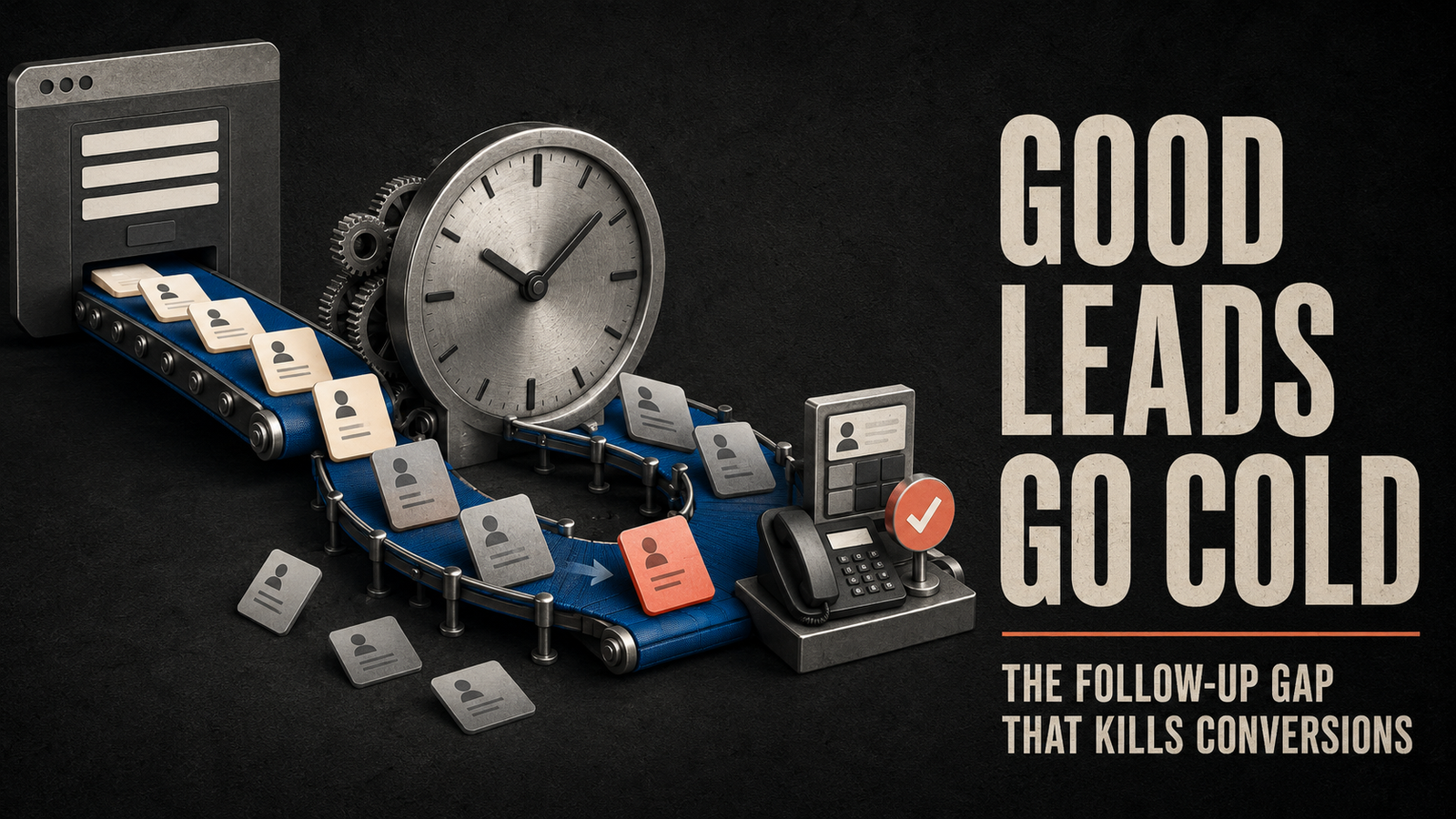

The campaign generated the lead successfully.
The advertisement attracted the prospect. The landing page explained the offer, and the visitor willingly submitted their contact details.
But when the sales team called, the prospect did not answer.
After two unsuccessful attempts, the lead was marked as poor quality. Marketing was told that the campaign was attracting uninterested people, and the advertising budget was reduced.
This happens frequently in lead-generation campaigns.
However, an unanswered call does not necessarily mean the original lead was irrelevant. The prospect may have been busy, unable to recognise the number or expecting a message before the call. The business may also have responded after the prospect’s interest had already reduced.
Lead generation does not end when a form is submitted.
The transition between marketing and sales is one of the most vulnerable parts of the entire funnel. A relevant enquiry can become a lost opportunity when the response is late, inconsistent or disconnected from the original advertisement.
A structured lead follow-up process protects the value created by the campaign.
What Is a Lead Follow-Up Process?
A lead follow-up process is the system a business uses to contact, qualify, nurture and convert people who have expressed interest.
It defines:
- Where new leads are received
- Who is responsible for them
- How quickly the first response occurs
- Which communication channel is used
- What the salesperson says
- How many contact attempts are made
- How outcomes are recorded
- When follow-up stops
- Which leads enter a nurturing sequence
This process sits between lead capture and sales conversion.
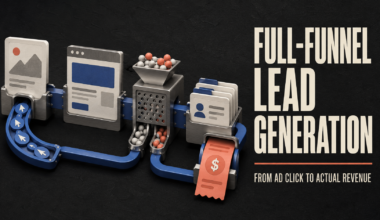
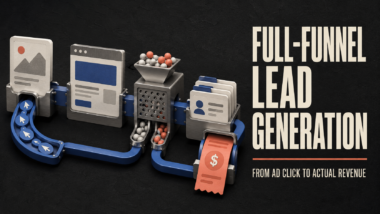
In my guide to full-funnel lead generation, I explained that advertising, landing pages, qualification, sales and revenue measurement must operate as one system.
Follow-up is the stage that connects captured demand with an actual business conversation.
An Unanswered Lead Is Not Automatically a Bad Lead
A person may submit a form while:
- Travelling
- Working
- Comparing several providers
- Browsing late at night
- Sitting in a meeting
- Using a different phone
- Expecting a WhatsApp message
- Waiting to discuss the decision with someone else
If the business calls at an unsuitable time, the lead may not answer.
This does not prove that the campaign attracted the wrong person.
Lead quality and contactability are related but separate issues.
A lead should normally be considered low quality when available information shows that the person:
- Requested an unrelated service
- Lives outside the service area
- Entered invalid information
- Does not meet the eligibility criteria
- Has no genuine requirement
- Is seeking employment
- Cannot realistically purchase the offer
- Clearly denies submitting the enquiry
A person who simply did not answer should be classified as “contact attempted” or “unreachable,” not automatically “unqualified.”
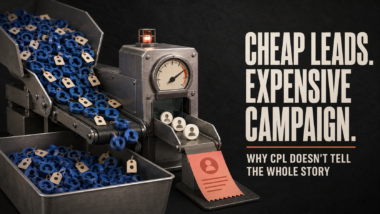
This distinction is also important when evaluating cost per lead versus lead quality.
Why Valid Leads Lose Interest
Lead intent is not permanent.
Interest can reduce when the business creates unnecessary delays or friction.
The Response Comes Too Late
The prospect may continue researching after submitting the enquiry.
During that time, they may contact competitors, read reviews, reconsider the expense or become distracted by other priorities.
The faster the business acknowledges the enquiry, the more connected the follow-up feels to the original action.
A fast response does not require an aggressive sales call. Even a short confirmation message can reassure the prospect that the enquiry was received.
The Caller Provides No Context
An unfamiliar number calls and says:
“Hello, are you interested in our services?”
The lead may not remember which form they completed or may assume the call is spam.
A contextual opening performs a different function:
“Hello, you recently requested information about our dental implant consultation. I’m calling to understand your requirement and explain the available appointment process.”
The prospect now knows:
- Which enquiry is being discussed
- Why the business is calling
- What will happen during the conversation
The Sales Message Does Not Match the Advertisement
The advertisement promises one offer, but the salesperson explains something different.
For example:
- The advertisement promotes a free consultation, but the caller immediately asks for payment.
- The advertisement highlights one service, but the caller pushes another.
- The creative mentions a location, but the salesperson says the service is unavailable there.
- The advertisement suggests an easy process, but the caller introduces unexpected conditions.
This breaks message continuity.
The advertisement, landing page and sales conversation should describe the same offer.
The Business Makes Only One Attempt
One unanswered call is weak evidence of disinterest.
A serious follow-up process uses several reasonable attempts across suitable times and channels.
The purpose is not to repeatedly disturb the prospect. It is to provide a fair opportunity for someone who already requested contact to respond.
There Is No Nurturing
Some leads are relevant but not ready.
They may need:
- More information
- Price clarification
- Internal approval
- Time to compare options
- Proof of results
- A later appointment
- A reminder when circumstances change
If every non-immediate buyer is discarded, the business loses potential future customers.
The First Follow-Up Should Begin Before the Sales Call
The thank-you page or confirmation message should prepare the lead for the next step.
After form submission, clearly explain:
- That the enquiry was received
- Which business will contact them
- How they will be contacted
- What information will be discussed
- Whether they need to prepare anything
- How they can contact the business directly
For example:
“Thank you. Your consultation request has been received. Our team will contact you by phone or WhatsApp to understand your requirements and help you choose the next step.”
This reduces uncertainty.
It also makes the future call more recognisable.
Build a Clear Lead-Assignment System
Every lead should have one responsible owner.
Without assignment rules, leads may remain untouched because everyone assumes someone else will respond.
Lead distribution can be based on:
- Location
- Service
- Sales territory
- Language
- Team availability
- Product category
- Lead value
- Existing customer ownership
The CRM or lead-management system should record:
- When the lead was received
- Who received it
- When contact was attempted
- Which channel was used
- What happened
- The next scheduled action
A spreadsheet can support a small operation, but it must be updated consistently. A more advanced system is not useful if the sales team does not use it properly.
Create a Practical Follow-Up Sequence
A follow-up sequence should be persistent without becoming intrusive.
A simple structure could include:
Immediate Confirmation
Send an automated acknowledgement after form submission.
The message should confirm the enquiry and set expectations.
First Personal Contact
The assigned representative attempts contact while the enquiry is still recent.
If the prospect answers, the representative begins qualification.
Contextual Message
If the call is unanswered, send a short message explaining:
- Who is contacting them
- Which enquiry they submitted
- Why the call was made
- How they can respond
Follow-Up Attempts
Make additional attempts at different reasonable times rather than repeating calls within a short period.
Value-Based Follow-Up
Share something that helps the prospect decide, such as:
- Service details
- A process explanation
- A relevant case study
- Frequently asked questions
- Appointment availability
- Pricing information
- A comparison guide
Do not send unrelated promotional material merely to keep messaging.
Nurturing
If the prospect is relevant but not ready, move them into an appropriate nurturing stage rather than treating them as lost.
The exact number and timing of attempts should reflect the business, purchase value, customer expectations and communication consent.
A Better Opening Call Structure
The first call should not feel like a cold call.
The prospect already expressed interest, so the opening should reconnect them with that moment.
A practical structure is:
- Introduce yourself.
- Name the business.
- Reference the specific enquiry.
- Confirm that it is a suitable time.
- Explain the purpose of the conversation.
- Ask one relevant opening question.
Example:
“Hello, this is [Name] from [Business]. You recently requested information about our solar installation service for your property. Is this a convenient time for a quick discussion? I’d like to understand your electricity requirements and explain how the assessment works.”
The opening is specific without being overly long.
Ask Qualification Questions Naturally
Qualification should feel like a useful conversation, not an interrogation.
The representative should explain why information is being requested.
Instead of:
“What is your budget?”
Try:
“To recommend a suitable option, it would help to understand the approximate investment range you are considering.”
Relevant questions may cover:
- Current requirement
- Main problem
- Location
- Desired service
- Budget range
- Purchase timeline
- Decision-making process
- Previous attempts
- Expected outcome
Only ask questions that affect the next step.
Separate Qualification From Selling
The first conversation does not always need to close the sale.
Its purpose may be to:
- Confirm relevance
- Understand the requirement
- Answer initial questions
- Book an appointment
- Schedule a demonstration
- Prepare a quotation
- Introduce the correct specialist
Trying to force a purchase before understanding the prospect can reduce trust.
A clear next step is more valuable than an aggressive pitch.
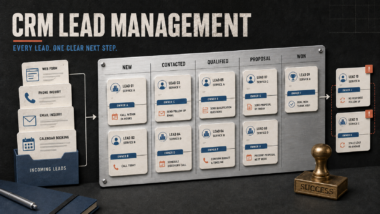
Use Consistent CRM Statuses
I recommend separating lead outcomes into clear categories.
| CRM Status | Meaning |
|---|---|
| New | Lead received but not yet contacted |
| Contact Attempted | At least one attempt made |
| Contacted | A conversation occurred |
| Invalid | Contact information does not work |
| Duplicate | The same genuine lead already exists |
| Not Relevant | Requirement does not match the offer |
| Qualified | Lead meets the agreed criteria |
| Appointment Booked | Meeting or consultation scheduled |
| Appointment Completed | Prospect attended |
| Proposal Sent | Commercial offer provided |
| Nurture | Relevant but not ready |
| Won | Became a customer |
| Lost | Opportunity ended with a recorded reason |
Avoid vague labels such as “bad lead” or “not interested.”
They do not explain what happened or what marketing should improve.
Measure the Follow-Up Stage
A campaign report should include post-lead metrics.
Contact Rate
Contact Rate = Contacted Leads ÷ Total Leads × 100
This shows whether the team is successfully reaching prospects.
Qualification Rate
Qualification Rate = Qualified Leads ÷ Contacted Leads × 100
This reveals how relevant the contacted leads are.
Appointment Rate
Appointment Rate = Appointments Booked ÷ Qualified Leads × 100
This measures whether qualification conversations progress.
Show-Up Rate
Show-Up Rate = Completed Appointments ÷ Booked Appointments × 100
This helps evaluate the confirmation and reminder process.
Lead-to-Sale Rate
Lead-to-Sale Rate = Customers Acquired ÷ Total Leads × 100
This connects marketing volume with customer acquisition.
Response-Time Compliance
Instead of relying only on an average, track how many leads received the first response within the business’s agreed service level.
This makes follow-up accountability easier to manage.
Diagnose the Correct Problem
Different symptoms require different solutions.
| Symptom | Likely Problem |
| Many invalid numbers | Form quality, placements or verification |
| Relevant leads not answering | Timing, caller recognition or slow response |
| Leads answer but deny interest | Message mismatch or accidental submissions |
| Qualified leads refuse appointments | Offer, script or perceived value |
| Appointments are booked but not attended | Weak confirmation or low commitment |
| Proposals are sent but not closed | Pricing, trust, competition or sales handling |
| Customers are acquired but campaigns show no revenue | Tracking and attribution |
This diagnostic approach prevents marketing and sales teams from changing the wrong part of the system.
Connect Sales Feedback With Campaign Optimization
Sales feedback should be structured and specific.
Useful feedback includes:
- Lead location
- Requested service
- Budget suitability
- Purchase timeline
- Qualification status
- Lost reason
- Appointment outcome
- Revenue
Unhelpful feedback includes:
- “All leads are bad.”
- “Nobody is interested.”
- “The campaign is not working.”
Marketing needs patterns, not general frustration.
If most unsuitable leads come from one campaign, placement or advertisement, the campaign can be adjusted.
If lead quality is strong but contact rates are low across every source, the problem is more likely within the follow-up process.
Do Not Optimize Advertising for Form Submissions Alone
Advertising platforms learn from the conversion events they receive.
If every submission is recorded as an equal success, the platform may find more people likely to complete forms—not necessarily people likely to buy.
Where appropriate tracking and consent are available, deeper outcomes can be used, including:
- Qualified lead
- Appointment
- Customer
- Revenue
This connects the follow-up process with campaign learning.
The cleaner the CRM data, the more useful the feedback becomes.
Nurture Leads Without Spamming Them
Lead nurturing should help the prospect progress.
A useful nurturing sequence may answer:
- How the service works
- What the customer should expect
- Which option suits different needs
- What common mistakes to avoid
- How pricing is determined
- Which questions to ask before deciding
- What the next step requires
The content should relate directly to the original enquiry.
A clinic lead interested in one treatment should not receive unrelated messages about every service the clinic offers. A business lead should not receive daily sales messages simply because they once downloaded a guide.
Relevance and reasonable frequency matter.
Respect Consent and Communication Preferences
A submitted enquiry authorises an appropriate response to that enquiry. It does not automatically justify unlimited promotional messaging.
Businesses should:
- Explain how contact information will be used
- Provide appropriate opt-out options
- Protect lead data
- Avoid sharing data unnecessarily
- Follow applicable communication and privacy requirements
- Respect requests to stop contact
- Limit messaging to relevant purposes
Trust can be lost quickly when a follow-up process feels invasive.
How This Article Connects to the Series
Lead follow-up is one part of a wider digital-marketing system.
Continue with:
- Full-Funnel Lead Generation for the complete journey from advertising to revenue.
- Cheap Leads, Expensive Campaign for measuring qualification and customer acquisition beyond CPL.
- Landing Page Optimization for improving the stage before the lead enters the CRM.
- Marketing Attribution Explained for connecting sales and revenue back to the campaigns that influenced them.
Together, these guides cover acquisition, conversion, qualification, follow-up and measurement as one connected performance-marketing discipline.
Frequently Asked Questions About Lead Follow-Up
Why are my leads not answering calls?
Possible reasons include delayed response, unfamiliar caller identification, unsuitable timing, weak intent, accidental submissions or the absence of contextual messaging.
How quickly should I respond to a new lead?
Respond as soon as your team can do so consistently and professionally. Set an internal response standard and measure whether the team follows it.
How many times should a lead be contacted?
There is no universal number. Use several reasonable attempts across appropriate times and channels without becoming intrusive.
Is an unanswered lead unqualified?
No. Unanswered describes contactability. Unqualified means available information shows that the lead does not meet the business criteria.
Should I call or send a WhatsApp message first?
The best sequence depends on what the form promised and the prospect’s communication consent. An immediate confirmation followed by contextual personal contact is often clearer than an unexplained call.
What should I say in the first follow-up?
Introduce yourself, identify the business, reference the exact enquiry, explain why you are contacting them and ask one relevant opening question.
How can marketing improve sales follow-up?
Marketing can provide campaign context, define lead criteria, preserve source information, create automated confirmation and analyse CRM outcomes.
What is the most important lead follow-up metric?
No single metric is sufficient. Contact rate, qualification rate, appointment rate, show-up rate and lead-to-sale rate should be reviewed together.
Final Thoughts
A campaign can generate a valid lead and still appear unsuccessful because the opportunity was lost after submission.
The prospect may not recognise the caller. The response may arrive too late. The message may not match the advertisement, or the lead may be discarded after one unsuccessful attempt.
These are follow-up problems—not automatically lead-quality problems.
A strong process acknowledges the enquiry, assigns ownership, provides context, records every outcome and gives relevant prospects a clear next step.
Marketing creates the opportunity.
Follow-up determines whether the business gets the chance to convert it.