
When a lead-generation campaign underperforms, the advertising platform usually receives the blame.
The targeting must be wrong. The creative needs to change. The campaign needs a larger budget. The cost per lead is too high.
These may be valid observations, but paid advertising is only one part of the system.
An advertisement can generate a relevant click and still produce no lead because the landing page is weak. The landing page can generate a valid enquiry that never becomes an opportunity because the lead is contacted too late. A salesperson can close a customer, but marketing may never learn which campaign influenced the sale.
This is why I do not evaluate lead generation as a collection of isolated campaign metrics.
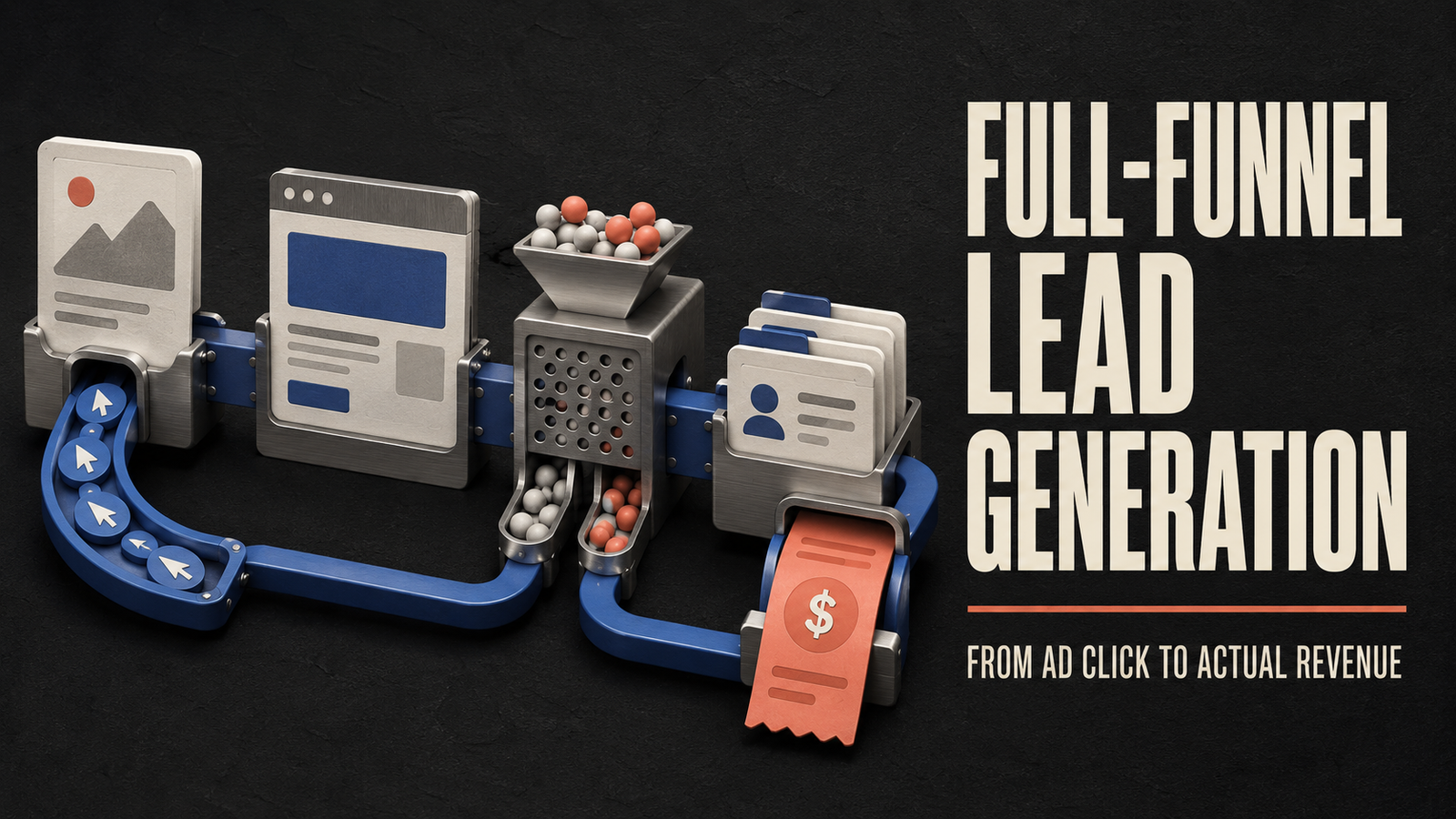
I evaluate it as one connected system:
Advertising → Landing Page → Lead Capture → Qualification → Sales Follow-Up → Customer → Revenue
Every stage affects the next one. Improving only the advertisement while ignoring the rest of the journey creates incomplete optimization.
Full-funnel lead generation connects these stages so that a business can identify where opportunities are being created, where they are being lost and which improvements will affect revenue.
What Is Full-Funnel Lead Generation?
Full-funnel lead generation is a marketing approach that manages and measures the entire journey from initial audience exposure to final revenue.
It connects five major areas:
- Traffic acquisition
- Landing-page conversion
- Lead qualification
- Sales conversion
- Revenue attribution
A basic lead campaign is designed to generate enquiries.
A full-funnel system is designed to generate customers profitably.
That distinction changes how the campaign is planned, tracked and optimized.
Instead of asking only, “How many leads did the campaign generate?” the full-funnel approach asks:
- Did the advertisement attract the right person?
- Did the landing page continue the same message?
- Was the lead genuine and relevant?
- How quickly did the sales team respond?
- Did the prospect attend the appointment or meeting?
- Did the lead become a customer?
- How much revenue did the customer generate?
- Which marketing interactions contributed to the result?
Why Lead Generation Must Be Treated as a System
Campaign performance can look completely different depending on which stage is being measured.
Consider this hypothetical example:
| Stage | Campaign A | Campaign B |
|---|---|---|
| Advertising spend | ₹50,000 | ₹50,000 |
| Clicks | 2,500 | 1,500 |
| Leads | 250 | 100 |
| Cost per lead | ₹200 | ₹500 |
| Qualified leads | 20 | 50 |
| Customers | 2 | 10 |
| Revenue | ₹40,000 | ₹2,00,000 |
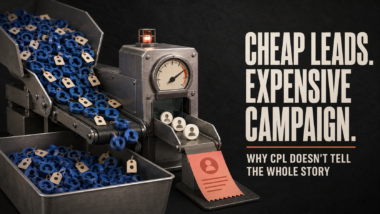
Campaign A appears stronger at the top of the funnel. It produces more clicks, more leads and a lower CPL.
Campaign B is the better business investment.
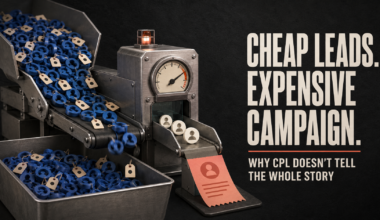
This is the same problem explained in my guide to cost per lead versus lead quality. A low CPL can hide poor qualification and weak customer acquisition.
Full-funnel reporting prevents the business from rewarding the wrong campaign.
Stage 1: Attract the Right Audience
The first job of advertising is not to generate the maximum number of clicks.
It is to generate attention from people who could realistically become customers.
That means the campaign message should qualify as well as persuade.
Make the Offer Specific
A generic advertisement attracts a generic audience.
Compare:
“Grow Your Business With Digital Marketing”
With:
“Paid Lead-Generation Campaigns for Dental Clinics in Delhi NCR”
The second message may receive fewer clicks, but the people clicking it have a clearer understanding of the service, audience and location.
Include Important Qualifying Information
Depending on the offer, the advertisement may need to communicate:
- Target customer
- Location
- Starting price
- Service category
- Minimum eligibility
- Required commitment
- Delivery area
- Expected next step
Hiding essential information may increase lead volume, but it also creates confusion after the click.
Match Campaign Intent
Different campaign types capture different levels of intent.
A person actively searching for a service may be closer to enquiring than someone passively watching a short video. This does not make one channel universally better. It means each channel has a different role.
Search advertising may capture existing demand. Social advertising may create awareness, demonstrate a problem or introduce an offer. Remarketing may bring an interested visitor back.
The campaign structure should reflect these differences.
Stage 2: Convert the Click
A strong advertisement creates an expectation. The landing page must confirm it.
If the advertisement offers a consultation for one service but sends the visitor to a generic homepage containing ten services, the journey loses focus.
The landing page should answer five questions quickly:
- What is being offered?
- Who is it for?
- What problem does it solve?
- Why should the visitor trust the business?
- What should the visitor do next?
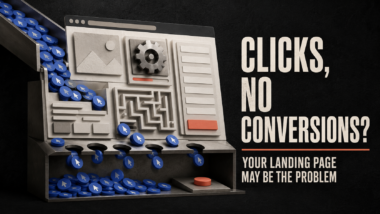
This stage is covered in detail in my article on landing-page optimization.
Maintain Message Match
The landing page should use language consistent with the advertisement.
The visitor should recognise:
- The same offer
- The advertised service
- The relevant audience
- The correct location
- The expected call to action
- Any price or condition mentioned in the creative
Message match reduces the feeling that the visitor has arrived on the wrong page.
Use One Primary Conversion Goal
A campaign landing page should normally focus on one main action.
This could be:
- Book an appointment
- Request a quotation
- Schedule a consultation
- Send a WhatsApp enquiry
- Purchase a product
- Download a resource
Unrelated navigation, social links and competing offers can distract from this action.
Build Trust Before Asking for Information
The amount of trust required usually increases with the price, complexity and risk of the decision.
Trust elements can include:
- Genuine testimonials
- Relevant case studies
- Clear process information
- Professional credentials
- Real photographs
- Transparent contact details
- Frequently asked questions
- Privacy information
- Clear terms
These elements should be factual. Unverified logos, invented testimonials and unrealistic guarantees do not demonstrate expertise.
Stage 3: Capture Useful Lead Information
The form should collect enough information for the business to take the next step without creating unnecessary friction.
For a basic enquiry, the business may need:
- Name
- Phone number
- Email address
- Required service
A higher-value or specialised service may also need:
- Location
- Budget range
- Purchase timeline
- Property or business type
- Eligibility
- Preferred appointment time
Every additional question creates friction. That friction can be useful when it filters unsuitable prospects, but harmful when it asks for information nobody uses.
Form Completion Is Not the Final Goal
Advertising platforms usually treat a submitted form as a successful conversion.
The business must look deeper.
A lead may be:
- Invalid
- Duplicate
- Unreachable
- Outside the service area
- Looking for employment
- Seeking a service the business does not offer
- Interested but not ready
- Qualified and ready to speak
- Qualified but requiring nurturing
All of these outcomes should not be grouped under one “lead” status.
Stage 4: Define Lead Quality
Marketing and sales must agree on what qualifies as a valid opportunity.
Without a shared definition, sales may describe every difficult lead as poor quality, while marketing may count every submitted form as successful.
A qualification framework could include:
- Genuine need
- Valid contact details
- Appropriate location
- Suitable budget
- Relevant service interest
- Decision-making ability
- Realistic timeline
- Willingness to communicate
The criteria should match the business model.
For example, a clinic may consider service interest, location and appointment availability. A real-estate company may prioritise budget, preferred area and purchase timeline. A business-to-business agency may require company size, decision-making authority and service need.
Use Consistent CRM Statuses
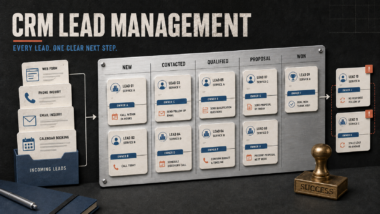
I recommend using clear lead stages such as:
- New
- Contact Attempted
- Contacted
- Invalid
- Duplicate
- Not Relevant
- Qualified
- Appointment Booked
- Appointment Completed
- Proposal Sent
- Won
- Lost
- Nurture
Each status should have a written definition.
This prevents two sales representatives from categorising the same situation differently.
Stage 5: Respond While Interest Is Active
Lead generation does not end when the form reaches the CRM.
The sales process begins immediately.
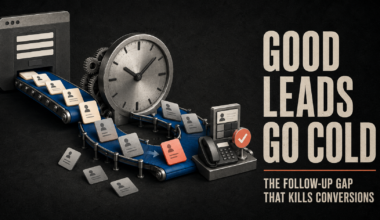
A prospect who submitted an enquiry is likely comparing options or expecting a response. If the business waits too long, the prospect may forget the advertisement, lose interest or speak with a competitor.
The follow-up process should define:
- Who receives the lead
- How quickly the first attempt occurs
- Which channel is used
- How many attempts are made
- When a message is sent
- What happens when the lead does not answer
- How future follow-up is scheduled
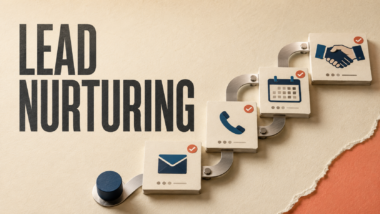
- When the lead moves into nurturing
Use a Relevant Opening
The first call or message should include enough context for the prospect to recognise the enquiry.
Instead of:
“Hello, you filled out a form. Are you interested?”
Use:
“Hello, you recently requested information about our solar installation consultation. I’m calling to understand your property requirements and explain the next step.”
The second opening reminds the lead what they asked for and makes the conversation feel connected.
Separate Unreachable From Unqualified
A lead who does not answer is not automatically unqualified.
The correct status may be “contact attempted” or “unreachable.”
A lead should normally be marked unqualified only when the business has enough information to determine that the prospect does not meet the relevant criteria.
This distinction matters because a campaign with poor contact rates requires a different solution from a campaign attracting unsuitable people.
Stage 6: Connect Marketing With Sales Outcomes
Campaign optimization becomes much stronger when advertising platforms receive information about deeper outcomes.
Instead of recording only the original form submission, the business should attempt to track:
- Valid lead
- Qualified lead
- Appointment
- Proposal
- Sale
- Revenue
Where appropriate systems and consent mechanisms are available, selected offline outcomes may be sent back to the advertising platform.
This helps the algorithm learn from meaningful business results rather than every form submission.
Protect Data Carefully
Customer data should be handled securely and in accordance with applicable privacy requirements.
The business should:
- Collect only necessary information
- Explain how data will be used
- Restrict CRM access
- Protect exported files
- Avoid placing sensitive information in unsecured spreadsheets
- Use appropriate consent and data-sharing practices
Better measurement should not come at the cost of careless data handling.
Stage 7: Measure Attribution
Customers may interact with more than one campaign before converting.
A prospect could:
- Watch a social advertisement.
- Visit the website.
- Leave without enquiring.
- Search for the company later.
- Click a search advertisement.
- Submit a form.
- Convert after a sales call.
Which campaign generated the customer?
Search captured the final enquiry, but social introduced the business.
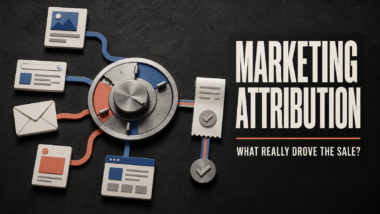
This is why full-funnel measurement needs marketing attribution.
Do Not Add Platform Conversions Blindly
Two advertising platforms may both claim the same sale.
Each platform uses its own attribution window, tracking information and modelling.
The CRM should remain the main record of:
- Unique leads
- Qualified leads
- Customers
- Revenue
Advertising platforms remain valuable for campaign optimization, but their reported conversions should be reconciled with actual business records.
The Metrics I Use to Diagnose a Lead Funnel
When I review lead-generation performance, I separate the metrics by stage.
Advertising Stage
- Impressions
- Reach
- Click-through rate
- Cost per click
- Relevant search terms
- Audience and placement performance
Landing Page Stage
- Landing page visits
- Engagement
- Form starts
- Form completions
- Conversion rate
- Mobile performance
- Page speed
Lead-Quality Stage
- Valid leads
- Contact rate
- Qualification rate
- Cost per qualified lead
- Invalid and duplicate rate
Sales Stage
- Appointment rate
- Show-up rate
- Proposal rate
- Lead-to-sale rate
- Sales-cycle length
Revenue Stage
- Customers acquired
- Customer acquisition cost
- Revenue
- Return on advertising spend
- Average customer value
- Repeat purchase or lifetime value
This structure helps identify whether the problem belongs to advertising, the landing page, qualification, sales or measurement.
A Full-Funnel Diagnostic Table
| Problem | Likely Area | What to Review |
| Few clicks | Advertisement | Creative, offer, audience and relevance |
| Clicks but no leads | Landing page | Message match, speed, form and trust |
| Many invalid leads | Lead capture | Form design, verification and placements |
| Relevant leads not answering | Follow-up | Speed, timing, caller context and messaging |
| Good leads but few appointments | Sales process | Script, offer and objection handling |
| Appointments but low attendance | Confirmation | Reminders, scheduling and commitment |
| Sales but poor reported ROAS | Measurement | Attribution, CRM revenue and offline tracking |
| Strong platform results but weak revenue | Optimization signal | Lead quality and deeper conversion events |
Common Full-Funnel Mistakes
Optimizing for the Cheapest CPL
A cheaper lead is valuable only when it has a realistic chance of becoming a customer.
Sending Every Campaign to the Homepage
A generic homepage rarely maintains the specific message of every advertisement.
Measuring Form Submissions as Sales
A lead is a possible opportunity, not confirmed revenue.
Using Inconsistent Lead Statuses
Poor CRM discipline makes campaign comparison unreliable.
Ignoring Sales Response Time
A relevant lead can become cold because of slow follow-up.
Changing Several Variables Together
If the audience, creative, offer and landing page all change simultaneously, the business cannot identify what improved or damaged performance.
Trusting One Platform as the Complete Truth
Each platform sees only part of the customer journey.
Scaling Before Fixing the Funnel
Increasing the advertising budget multiplies both strengths and weaknesses.
If the landing page or sales process is broken, scaling may simply generate more waste.
A Practical 30-Day Full-Funnel Improvement Plan
Week 1: Measurement
- Define valid and qualified leads.
- Standardise CRM statuses.
- Check conversion tracking.
- Confirm that campaign-source information reaches the CRM.
- Test calls, forms and messaging actions.
Week 2: Acquisition and Landing Page
- Review search terms, audiences and placements.
- Compare advertisement promises with landing-page content.
- Fix mobile usability issues.
- Simplify forms.
- Strengthen the offer and call to action.
Week 3: Lead Quality and Sales
- Analyse invalid and unqualified reasons.
- Review response time.
- Listen to or assess sales conversations where legally and operationally appropriate.
- Create a follow-up schedule.
- Improve appointment confirmation.
Week 4: Optimization
- Compare cost per qualified lead and customer acquisition cost.
- Identify the campaigns producing revenue.
- Send deeper conversion signals where appropriate.
- Begin one controlled test.
- Reallocate budget using funnel data—not CPL alone.
How These Articles Work Together
This article is the central guide to the lead-generation system.
Use the related articles for deeper explanations:
- Learn how to identify the campaigns influencing conversions in Marketing Attribution Explained.
- Diagnose traffic that clicks but does not convert in Landing Page Optimization.
- Understand why low CPL can hide poor performance in Cheap Leads, Expensive Campaign.
Together, these articles cover acquisition, conversion, qualification and measurement as one connected area of digital-marketing expertise.
Frequently Asked Questions About Full-Funnel Lead Generation
What is a full-funnel lead-generation strategy?
It is a strategy that connects advertising, landing pages, lead capture, qualification, sales follow-up and revenue measurement.
What is the difference between a lead and a qualified lead?
A lead has submitted contact information. A qualified lead also meets the business’s relevance, need, location, budget or intent requirements.
Which lead-generation metric is most important?
No single metric explains the entire funnel. CPL, cost per qualified lead, lead-to-sale rate, customer acquisition cost and revenue should be evaluated together.
Why do I receive leads but no sales?
Possible reasons include poor targeting, weak qualification, slow follow-up, an unsuitable offer, poor sales handling or incorrect tracking.
Should marketing be responsible for sales revenue?
Marketing should be accountable for attracting relevant opportunities and measuring acquisition. Sales is accountable for effectively handling and converting those opportunities. Both teams need shared reporting.
How can I improve lead quality?
Use more specific advertising, add meaningful qualifying information, improve message match, ask relevant form questions and send qualified outcomes back to campaign systems.
When should I scale a campaign?
Scale after confirming that the campaign produces qualified leads or customers at a sustainable cost and that the landing page and sales team can handle additional volume.
How do I connect offline sales with digital campaigns?
Preserve campaign-source information in the CRM, record lead outcomes consistently and use appropriate offline conversion integrations where available.
Final Thoughts
A lead-generation campaign should not be judged at the moment a form is submitted.
The real journey continues through qualification, sales follow-up, customer acquisition and revenue.
Advertising brings the opportunity. The landing page converts attention. Qualification separates relevance from volume. Sales turns interest into a customer. Attribution connects the outcome back to marketing.
When these stages operate separately, every team sees only part of the problem.
When they are connected, the business can answer the question that actually matters:
Which marketing activity is producing profitable customers—and where is the system losing everyone else?