
Not every lead has the same level of interest, urgency, or potential value.
One person may submit a form because they are ready to speak with a sales representative. Another may download a guide while researching a purchase planned for several months later. A third person may provide incomplete information or request a service the business does not offer.
If all three leads receive the same follow-up, the sales team may spend too much time on low-potential inquiries while genuinely interested prospects wait for a response.
Lead scoring helps solve this problem.
It provides a structured method for evaluating leads according to their suitability for the business and the actions they have taken. Instead of relying entirely on instinct, teams can use agreed criteria to decide which prospects require immediate attention, which need additional nurturing, and which should not enter the active sales pipeline.
A practical lead-scoring system also strengthens the connection between marketing and sales. It turns raw conversion data into a clearer view of lead quality and helps the business understand which campaigns generate valuable opportunities.
1. What Is Lead Scoring?
Lead scoring is the process of assigning points or categories to prospective customers based on their characteristics, behavior, and level of interest.
Each lead receives a score determined by criteria selected by the business.
For example, a lead might receive points for:
- Requesting a consultation
- Visiting a pricing page
- Matching the target location
- Selecting a relevant service
- Returning to the website
- Opening or clicking a follow-up email
- Providing a business email address
- Meeting the minimum budget requirement
The lead may lose points for:
- Providing incomplete contact information
- Selecting an unsupported location
- Requesting an unrelated service
- Using obviously invalid details
- Showing no further engagement
- Indicating that the service is not required soon
The total score helps the marketing and sales teams determine how the lead should be handled.
Lead scoring does not replace human judgment. It provides a consistent starting point for prioritization.
2. Why Is Lead Scoring Important?
A business may generate more leads than its sales team can contact immediately.
Without a prioritization system, representatives may call leads in the order they appear in the CRM. This approach is simple, but it ignores differences in fit and intent.
A high-potential lead might be buried beneath several low-quality inquiries.
Lead scoring helps businesses:
- Respond faster to high-intent prospects
- Reduce time spent on irrelevant inquiries
- Create consistent qualification standards
- Improve coordination between marketing and sales
- Identify leads that require nurturing
- Compare the quality of different campaigns
- Build more useful CRM reports
- Understand why a low cost per lead may not produce sales
This is particularly important when a campaign is generating inexpensive inquiries that do not become customers. As explained in the guide to cheap leads versus lead quality, the lowest cost per lead is not always the strongest business result.
3. What Is the Difference Between Lead Fit and Lead Intent?
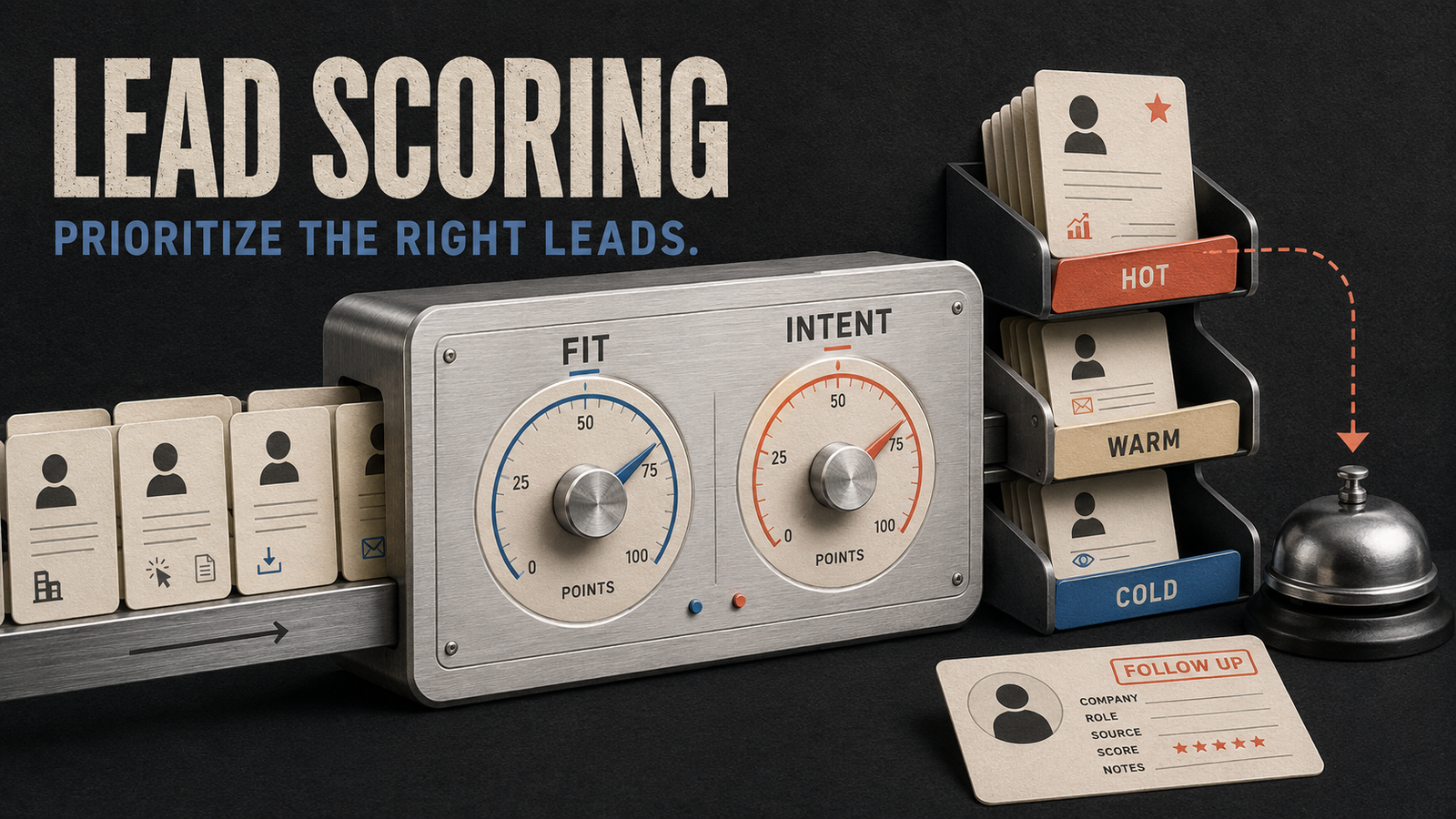
An effective lead-scoring model should evaluate both fit and intent.
Lead fit
Lead fit measures how closely a prospect matches the type of customer the business can successfully serve.
Depending on the business, fit criteria might include:
- Location
- Industry
- Company size
- Job role
- Service required
- Budget range
- Property type
- Eligibility
- Business model
- Purchase authority
For example, a company serving businesses only in India may assign a lower score to inquiries from unsupported countries.
Lead intent
Lead intent measures how strongly the prospect’s behavior suggests they are considering action.
Intent signals might include:
- Requesting a quotation
- Booking a consultation
- Visiting the pricing page
- Returning to the website multiple times
- Downloading a service brochure
- Replying to an email
- Asking about implementation timelines
- Viewing a case study
- Completing a detailed inquiry form
Fit answers the question: Can this person become a suitable customer?
Intent answers: How interested does this person appear to be right now?
A lead can score highly in one area and poorly in the other. Someone may fit the ideal customer profile but have no immediate buying intention. Another person may show strong urgency but fall outside the company’s service area.
The final priority should consider both dimensions.
4. What Types of Lead-Scoring Data Can Be Used?
A lead-scoring system can use several categories of information.
Demographic data
For consumer-focused businesses, relevant information may include age range, location, household requirements, or service eligibility.
Only collect information that is genuinely required and handle personal data responsibly.
Firmographic data
For business-to-business campaigns, firmographic criteria can include:
- Company size
- Industry
- Annual revenue range
- Number of locations
- Business type
- Decision-making role
- Operating region
Behavioral data
Behavioral scoring considers the actions a prospect takes.
Examples include:
- Landing-page visits
- Form submissions
- Email clicks
- Webinar registrations
- Pricing-page visits
- Consultation bookings
- Repeat website sessions
- Resource downloads
Behavior helps distinguish someone who submitted a low-commitment form from someone who continues to engage with the business.
Source and campaign data
The campaign that generated the lead can provide additional context.
For example, leads from a high-intent search campaign may behave differently from leads generated through a broad awareness campaign.
A consistent UTM tracking system helps preserve the source, medium, campaign, and creative information required for this analysis.
Sales feedback
Sales representatives can add information that is not available through website behavior.
They may identify whether the lead:
- Answered the phone
- Confirmed a genuine requirement
- Had an appropriate budget
- Had the authority to make a decision
- Requested a proposal
- Scheduled a meeting
- Was a duplicate or invalid inquiry
This feedback is essential for improving the scoring model over time.
5. How Do You Create a Basic Lead-Scoring Model?
A basic lead-scoring model can begin with a 100-point scale.
The exact values should reflect the business rather than a universal template. However, a starting structure might look like this:
| Lead attribute or action | Example score |
|---|---|
| Matches the target location | +10 |
| Requests the primary service | +15 |
| Meets the minimum budget | +15 |
| Has decision-making authority | +10 |
| Requests a consultation | +20 |
| Visits the pricing page | +10 |
| Returns to the website | +5 |
| Opens or clicks a follow-up message | +5 |
| Provides invalid contact details | -30 |
| Selects an unsupported location | -20 |
| Requests an unrelated service | -20 |
| Identified as a duplicate | -50 |
The score can then be translated into practical categories:
- Hot lead: 70–100 points
- Warm lead: 40–69 points
- Cold lead: 1–39 points
- Invalid or disqualified lead: 0 points or below
These thresholds are examples, not permanent rules. They should be adjusted after the business collects enough information about which scores are associated with qualified opportunities and customers.
6. How Should Hot, Warm, and Cold Leads Be Handled?
Lead categories are useful only when each category produces a clear action.
Hot leads
Hot leads match the target customer profile and demonstrate strong purchase intent.
They may have requested a consultation, selected an appropriate budget, or visited a high-intent page.
Recommended action:
- Notify the sales team immediately.
- Assign the lead to a specific representative.
- Begin the first follow-up as quickly as practical.
- Use direct, relevant communication.
- Record the result of every contact attempt.
Warm leads
Warm leads show potential but may not be ready to make an immediate decision.
They may fit the customer profile but have a longer timeline or limited engagement.
Recommended action:
- Add them to a structured follow-up sequence.
- Share useful information related to their requirement.
- Monitor future engagement.
- Invite them to take a higher-intent action.
- Review the score when new behavior occurs.
Cold leads
Cold leads show limited intent or do not fully match the ideal customer profile.
Recommended action:
- Avoid excessive sales pressure.
- Place suitable leads into long-term educational nurturing.
- Exclude clearly irrelevant or invalid inquiries.
- Reassess the lead if new engagement occurs.
The complete response process should align with the business’s lead follow-up system.
7. How Does Lead Scoring Connect With Conversion Tracking?
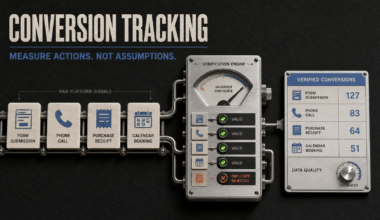
Conversion tracking records the action completed by a visitor. Lead scoring evaluates what that conversion may be worth.
For example, a website may record three form submissions as three conversions. However:
- The first lead may match the service area and request an immediate consultation.
- The second may be researching for a future requirement.
- The third may contain invalid contact information.
A basic conversion report gives each submission the same value. Lead scoring adds a second layer of analysis.
This distinction helps marketers evaluate campaigns using:
- Total conversions
- Valid leads
- Average lead score
- Number of hot leads
- Number of qualified leads
- Cost per qualified lead
- Lead-to-opportunity rate
- Lead-to-customer rate
A reliable conversion-tracking setup is therefore the starting point. Lead scoring improves the usefulness of the conversion data after the lead enters the system.
8. How Does Lead Scoring Improve Campaign Optimization?
Campaigns should not be compared only by the number or cost of their leads.
Consider this hypothetical example:
| Campaign | Leads | Cost per lead | Hot leads | Cost per hot lead |
| Campaign A | 100 | ₹300 | 10 | ₹3,000 |
| Campaign B | 60 | ₹450 | 20 | ₹1,350 |
Campaign A has the lower initial cost per lead. Campaign B generates fewer leads at a higher cost, but it produces twice as many hot leads.
If the marketer evaluates only cost per lead, Campaign A appears stronger. If lead quality is included, Campaign B may be the better use of the advertising budget.
This is why lead scoring should feed back into campaign reporting. It helps advertising decisions move closer to revenue and away from surface-level metrics.
9. What Lead-Scoring Mistakes Should You Avoid?
Assigning points without a clear reason
Every score should represent an actual relationship with customer quality or purchase intent.
Do not assign points simply because a data field is available.
Giving too much weight to low-intent actions
A blog visit or email open may indicate interest, but it should not carry the same value as requesting a proposal or booking an appointment.
Ignoring negative scoring
A model that only adds points can gradually classify disengaged or irrelevant contacts as high-priority leads.
Negative scoring helps account for invalid data, poor fit, and declining interest.
Treating the model as permanent
Customer behavior changes, campaign sources change, and the business may introduce new services. The model should be reviewed using actual sales outcomes.
Scoring activity without evaluating fit
Frequent website visits do not automatically make someone a suitable customer. Behavior and customer fit should be assessed separately.
Using scoring to hide poor lead quality
A complicated scoring model should not be used to make weak campaigns appear successful. The purpose is to create clarity, not manipulate reporting.
Failing to explain the model to sales
If the sales team does not understand why a lead received a certain score, they are less likely to trust or use it.
10. How Should Lead Scoring Be Set Up in a CRM?
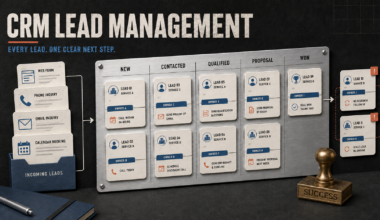
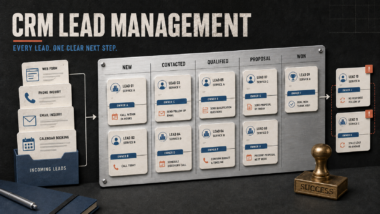
A practical CRM setup should make the score visible and actionable.
Useful fields include:
- Lead score
- Lead category
- Fit score
- Intent score
- Original source
- Original campaign
- Service required
- Qualification status
- Assigned sales representative
- Last contact date
- Next follow-up date
- Final outcome
Automation can then support the process.
For example:
- A hot lead can trigger an immediate internal notification.
- A warm lead can enter a structured nurturing sequence.
- An invalid lead can be removed from active follow-up.
- A score increase can create a new sales task.
- A customer conversion can send the outcome back to the marketing report.
Automation should support human judgment rather than remove it. Sales representatives should be able to correct a score when a conversation reveals information the automated system could not identify.
11. How Do You Use Sales Feedback to Improve Lead Scoring?
Lead scoring becomes more accurate when marketing and sales use the same definitions.
The sales team should consistently record why a lead was qualified, disqualified, won, or lost.
Useful disqualification reasons include:
- Invalid contact details
- Duplicate inquiry
- Outside service area
- Insufficient budget
- Unrelated requirement
- No current requirement
- Unable to contact
- Not a decision-maker
- Chose a competitor
- Service not available
The marketing team can compare these outcomes with the original scores.
If high-scoring leads are regularly disqualified for the same reason, the scoring criteria need adjustment. If a behavior strongly predicts sales but receives few points, its value may need to increase.
This feedback loop helps the model reflect actual customer outcomes rather than assumptions.
12. How Often Should a Lead-Scoring Model Be Reviewed?
A new model should be reviewed frequently during its early stages.
The business should compare scores with:
- Qualification results
- Appointment rates
- Proposal rates
- Sales outcomes
- Revenue
- Sales-team feedback
- Source and campaign performance
Once the system becomes stable, it can be reviewed at regular intervals or whenever there is a major change in the offer, website, target audience, or sales process.
A review should answer:
- Are high-scoring leads becoming qualified opportunities?
- Are valuable leads being classified too low?
- Are irrelevant leads receiving high scores?
- Which criteria have the strongest relationship with sales?
- Are the category thresholds still useful?
- Does the sales team trust and use the scores?
- Is all required data being captured correctly?
The scoring model should become simpler and more accurate over time, not unnecessarily complicated.
13. How Does Lead Scoring Support a Full-Funnel Strategy?
Lead scoring connects the middle of the funnel with the sales pipeline.
A complete process may look like this:
- A campaign attracts a potential customer.
- UTM parameters preserve the campaign information.
- Conversion tracking records the inquiry.
- The CRM creates the lead.
- Lead scoring evaluates fit and intent.
- The sales team prioritizes follow-up.
- The lead is qualified or disqualified.
- The final outcome is connected with the original campaign.
- Marketing uses the outcome to improve targeting, messaging, and budget allocation.
This is the practical connection between acquisition and revenue.
It supports the full-funnel lead-generation approach by ensuring that marketing does not stop measuring performance at the form-submission stage.
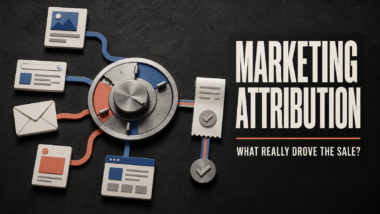
When lead scores, qualification results, campaign data, and customer outcomes are available together, marketing attribution also becomes more useful.
Final Thoughts
Lead scoring gives marketing and sales teams a shared method for deciding which prospects require the most attention.
A useful scoring model evaluates both customer fit and purchase intent. It distinguishes meaningful actions from weak engagement signals, includes negative criteria, and changes as the business collects better information.
The objective is not to replace personal conversations or automatically reject every low-scoring lead. The objective is to help the team use its time more effectively and create a more consistent qualification process.
Begin with a simple model, document every scoring rule, and compare the scores with actual sales outcomes. As the data improves, adjust the values and thresholds.
When lead scoring is connected with conversion tracking, campaign attribution, CRM management, and timely follow-up, it becomes more than a number. It becomes a practical system for turning marketing activity into better sales decisions.