
Generating a lead is not the final goal of digital marketing.
It is only the beginning of the sales conversation.
A potential customer may submit a form, send a WhatsApp message or request a consultation without being ready to purchase immediately. They may still be comparing providers, discussing the decision with someone else or trying to understand whether the service is right for them.
This is where lead nurturing becomes important.
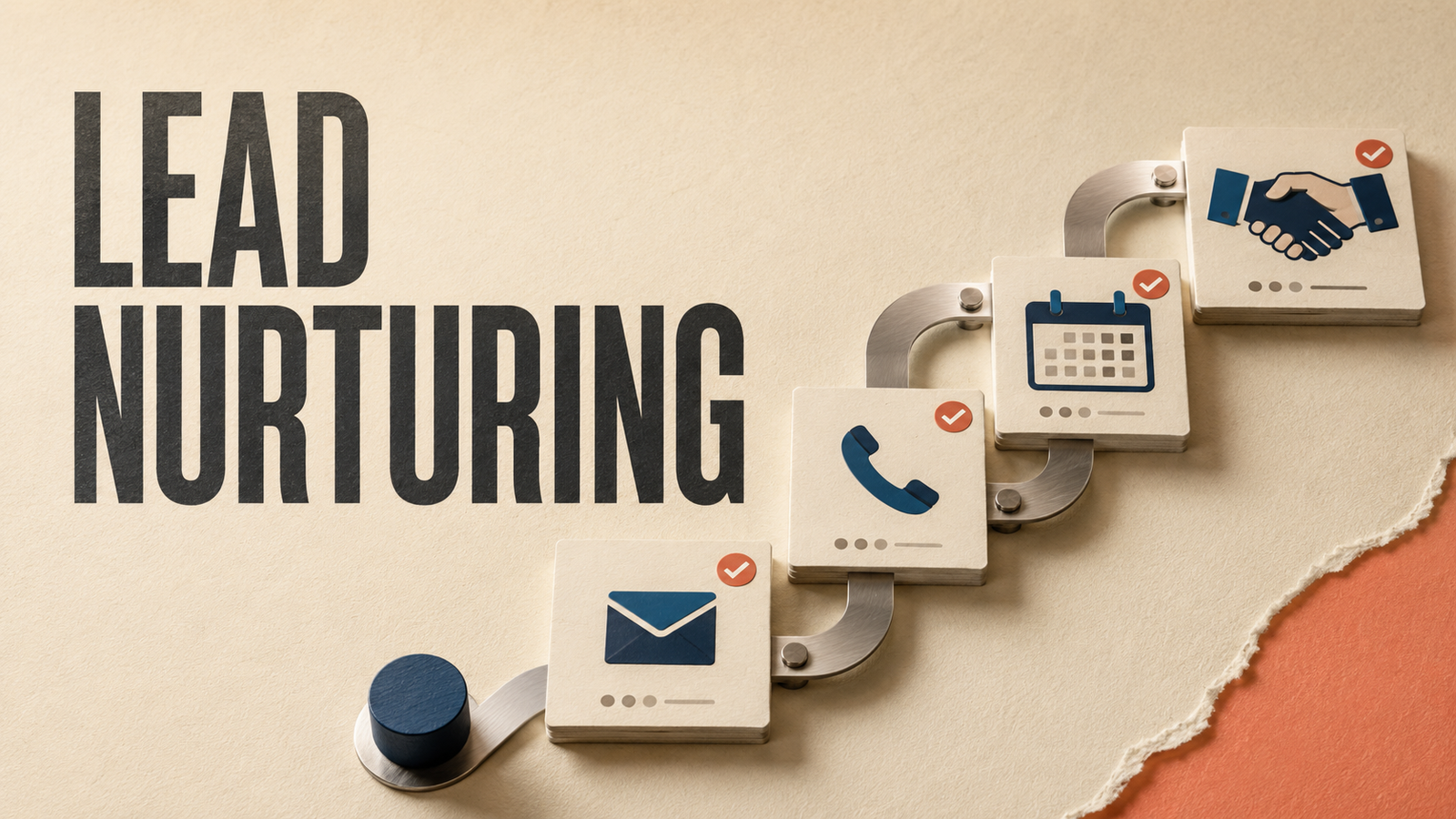
Lead nurturing is the process of building a relationship with a potential customer through timely communication, helpful information and consistent follow-up. Its purpose is to move the person from initial interest to a confident purchase decision.
Many businesses focus heavily on generating leads but pay very little attention to what happens after an enquiry is received. As a result, marketing campaigns are blamed for poor performance even when the real problem lies in delayed responses, weak follow-ups or an unstructured sales process.
A well-designed lead-nurturing strategy helps businesses convert more of the enquiries they already generate without necessarily increasing their advertising budget.
1. What Is Lead Nurturing?
Lead nurturing is a planned communication process used to educate, qualify and follow up with potential customers.
It is not simply the practice of sending promotional messages repeatedly.
Effective nurturing helps prospects answer the questions that may be preventing them from purchasing:
- Is this service suitable for my requirements?
- Can I trust this company?
- How does the process work?
- What will the service cost?
- What results can I realistically expect?
- How is this option different from the alternatives?
- What should I do next?
The nurturing process may include phone calls, emails, WhatsApp messages, case studies, demonstrations, appointment reminders or personalised recommendations.
The appropriate communication depends on the type of business and the customer’s position within the decision-making process.
A person who has just discovered a business needs different information from someone who has already received a proposal. A strong nurturing system recognises this difference and communicates accordingly.
2. Why Lead Generation Alone Is Not Enough
A digital marketing campaign can generate genuine enquiries without producing immediate sales.
This does not automatically mean that the leads are poor.
Some leads need additional information. Others may have submitted an enquiry outside business hours and forgotten about it by the time the sales team responds. Some may be interested but not ready to purchase until the following week or month.
Businesses frequently lose these opportunities because they follow up only once.
If the lead does not answer the first call, the enquiry is marked as unresponsive. If the person says they are “just exploring,” the sales team moves on to the next prospect.
This approach treats every lead as though they must purchase immediately.
In reality, different prospects require different levels of education and follow-up. Lead nurturing allows the business to remain relevant while the customer moves closer to making a decision.
As discussed in Why Your Digital Marketing Isn’t Generating Leads, the performance of a campaign depends on the complete customer journey—not only the advertisement that generated the initial enquiry.
3. The Difference Between Lead Generation and Lead Nurturing
Lead generation and lead nurturing are connected, but they solve different problems.
| Stage | Lead generation | Lead nurturing |
|---|---|---|
| Primary objective | Attract potential customers | Convert interest into action |
| Main activity | Advertising, SEO, content and landing pages | Follow-ups, education and relationship building |
| Initial outcome | Form submission, call or message | Appointment, proposal or purchase |
| Main metric | Cost per qualified lead | Lead-to-sale conversion rate |
| Common failure | Attracting the wrong audience | Failing to follow up properly |
Lead generation creates the opportunity. Lead nurturing develops that opportunity.
A business needs both stages to build a predictable customer-acquisition system.
The process should not be viewed as separate marketing and sales activities. Both teams are working toward the same outcome: converting the right prospect into a customer.
4. Start With a Fast and Relevant First Response
The first response establishes the tone for the rest of the relationship.
When someone submits an enquiry, they should receive an immediate confirmation explaining what will happen next.
This can be automated through email, SMS or WhatsApp, but the message should still feel relevant to the action taken.
A useful confirmation message might say:
Thank you for requesting information about our service. A member of our team will contact you shortly to understand your requirements and share the relevant details.
This is more useful than a generic message such as “Thank you for contacting us.”
The sales team should then respond as soon as practically possible. A fast response keeps the conversation connected to the moment when the prospect showed interest.
The first call or message should also mention the original enquiry.
Instead of asking, “How can I help you?”, provide context:
You recently requested a consultation through our website. I’m reaching out to understand your requirements and check which option would be most suitable for you.
This prevents confusion and makes the interaction feel more professional.
5. Qualify the Lead Before Trying to Sell
Not every enquiry should receive the same sales pitch.
Before recommending a service, the business needs to understand the prospect’s situation.
Useful qualifying questions may include:
- What problem are you trying to solve?
- Which service are you interested in?
- When would you like to get started?
- Have you used a similar service before?
- What result are you expecting?
- Who will be involved in the final decision?
- Is there a specific budget or requirement we should consider?
The questions should be relevant to the business. Asking too many questions at the beginning can make the conversation feel like an interrogation.
The objective is to identify the lead’s needs, urgency and suitability.
A qualified lead is not simply someone who has provided a phone number. It is a person with a relevant requirement, reasonable intent and the ability to move forward.
This distinction is explained further in Cost Per Lead vs Lead Quality, where we examine why the cheapest enquiry is not always the most valuable one.
6. Segment Leads Based on Their Intent
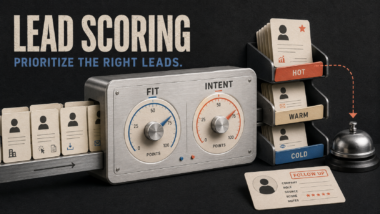
Once leads are qualified, they should be divided into practical categories.
Hot Leads
These prospects have an immediate requirement, understand the offer and are prepared to take the next step. They may need a quotation, consultation, demonstration or payment link.
Hot leads require direct and timely sales follow-up.
Warm Leads
These prospects are interested but need more information, approval or time before deciding.
They may benefit from case studies, service comparisons, frequently asked questions or a scheduled follow-up.
Cold Leads
These prospects are not currently ready to purchase. Their requirement may be several months away, or they may still be exploring the market.
Cold leads should not receive constant sales calls. They can instead enter a longer email or content-nurturing sequence.
Unqualified Leads
These enquiries may fall outside the target location, budget, service requirement or customer profile.
Unqualified leads should be recorded correctly so they do not distort campaign-performance reports.
Segmentation helps the sales team focus its immediate attention on the most promising opportunities while continuing to nurture prospects who may convert later.
7. Build a Practical Follow-Up Cadence
A follow-up cadence defines when and how a business will contact a lead.
The correct number of follow-ups depends on the product, buying cycle and communication channel. However, relying on a single call is rarely enough.
A practical short-term sequence might look like this:
| Timing | Action | Purpose |
|---|---|---|
| Immediately | Confirmation message | Acknowledge the enquiry |
| Within business hours | First call | Understand the requirement |
| Same day | Contextual WhatsApp message or email | Provide details and establish another contact channel |
| Next day | Second call or message | Reconnect if the lead did not respond |
| After 2–3 days | Share useful information | Answer common concerns |
| After one week | Personal follow-up | Check whether the requirement is still active |
| Longer term | Educational content | Remain relevant until the lead is ready |
This sequence should be adjusted based on the prospect’s response.
If someone asks to be contacted next week, respect that request. If the lead clearly says they are not interested, stop promotional follow-ups.
Lead nurturing should feel helpful, not intrusive.
8. Use Multiple Communication Channels Carefully
Different customers prefer different communication channels.
Some respond quickly to WhatsApp but ignore emails. Others prefer a phone conversation before making a decision. For business-to-business services, email may be more appropriate for proposals and documentation.
A lead-nurturing system may use:
- Phone calls for qualification and personalised conversations
- WhatsApp for quick updates and reminders
- Email for detailed information, proposals and case studies
- SMS for short confirmations
- Retargeting advertisements for continued brand visibility
- CRM notifications for internal sales follow-ups
Using multiple channels does not mean sending the same sales message everywhere.
Each channel should have a purpose. A phone call can identify the requirement, an email can explain the solution and WhatsApp can confirm the appointment.
The objective is to make communication convenient for the prospect while keeping the conversation organised.
9. Create Content That Answers Sales Questions
Content marketing is not limited to attracting website traffic.
Content can also help convert existing leads.
The best nurturing content often comes from questions that the sales team hears repeatedly.
Examples include:
- How does the service work?
- How long does the process take?
- What is included in the price?
- What should the customer prepare?
- What results should the customer expect?
- How is the company different from competitors?
- What mistakes should the customer avoid?
These questions can be answered through blog posts, videos, downloadable guides, comparison pages or email sequences.
For example, a lead who is uncertain about investing in digital marketing could receive a guide explaining the difference between cost per lead and lead quality. A prospect who has received a proposal could receive a case study showing how the service was implemented.
This type of content supports the sales conversation without forcing the prospect to speak with a salesperson every time they need information.
It also creates natural connections between different articles within the website. A guide about Landing Page Optimisation can attract a visitor through search, while a related article about lead nurturing can help that visitor understand what should happen after a conversion.
10. Personalise the Follow-Up
Personalisation does not require a complicated automation system.
Even small details can make a message more relevant:
- Use the prospect’s name
- Mention the service they enquired about
- Refer to their location or requirement
- Continue from the previous conversation
- Share information related to their specific concern
Compare these two messages:
Hi, are you interested in our services?
And:
Hi Rahul, you had enquired about generating commercial solar leads in Hyderabad. I’m following up to check whether you would like us to share the recommended campaign structure.
The second message gives the prospect enough context to respond.
Personalisation demonstrates that the business remembers the conversation and is not simply sending mass messages.
However, personalisation should be based on information the prospect has willingly shared. Businesses should avoid using unnecessary personal details that could make the communication feel uncomfortable.
11. Use a CRM to Manage the Process
As lead volume increases, spreadsheets and personal reminders become difficult to manage.
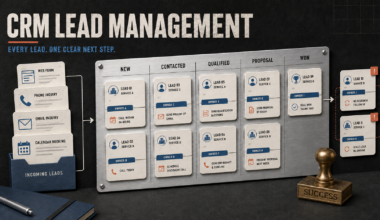
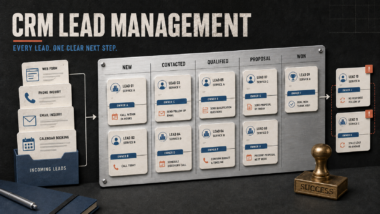
A customer relationship management system, or CRM, helps teams record interactions and track each prospect’s stage.
A simple lead pipeline may contain:
- New lead
- First contact attempted
- Contacted
- Qualified
- Appointment scheduled
- Proposal shared
- Negotiation
- Won
- Lost
- Long-term nurture
Every lead should have an owner, a current stage and a clearly defined next action.
The CRM should also record why opportunities are lost. Common reasons may include price, timing, location, service mismatch or no response.
This information helps both marketing and sales teams make better decisions.
Without an organised pipeline, businesses may generate more leads but still struggle to increase revenue because opportunities are being forgotten or followed up inconsistently.
12. Connect Sales Outcomes With Marketing Data
Marketing optimisation should not stop at form submissions.
If advertising platforms report 100 leads but the sales team finds that only 20 have relevant requirements, the business needs to understand where the remaining enquiries came from.
Campaign data should be connected with CRM outcomes whenever possible.
This allows marketers to compare:
- Which campaigns generate qualified leads
- Which advertisements produce appointments
- Which keywords attract high-intent prospects
- Which audiences produce paying customers
- Which lead sources create the highest customer value
This is particularly important when evaluating cost per lead.
A campaign generating inexpensive leads may appear successful, but a campaign with a higher lead cost may be more profitable if those enquiries convert at a better rate.
The real objective is not the cheapest lead. It is the most sustainable cost per customer.
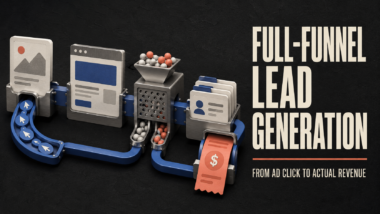
This is where lead nurturing connects with Marketing Attribution. Attribution shows where the enquiry originated, while CRM data reveals whether that enquiry eventually became a customer.
13. Common Lead-Nurturing Mistakes
Sending Only Promotional Messages
Repeatedly asking a prospect to purchase does not create trust. Include helpful information that supports the decision.
Following Up Without Context
Every message should explain why the business is contacting the person.
Treating Every Lead Identically
A hot lead needs a direct sales response, while a cold lead may need education and time.
Failing to Record Previous Conversations
Asking the same questions repeatedly makes the business look disorganised.
Automating Everything
Automation improves speed and consistency, but important conversations still require human judgement.
Ignoring Lost-Lead Reasons
Without recording why prospects do not convert, businesses cannot identify whether the problem is pricing, targeting, sales communication or the offer itself.
Focusing Only on Lead Volume
More leads do not automatically create more customers. Businesses must consider quality, response rates and sales conversions.
14. How to Measure Lead-Nurturing Performance
The performance of a nurturing system should be evaluated using business outcomes.
Useful metrics include:
- Percentage of leads successfully contacted
- Lead qualification rate
- Lead-to-appointment rate
- Appointment attendance rate
- Proposal-to-sale conversion rate
- Average time required to convert
- Cost per qualified lead
- Customer acquisition cost
- Revenue generated by each lead source
- Percentage of inactive leads successfully re-engaged
These measurements help identify exactly where prospects are leaving the process.
If leads answer calls but do not schedule appointments, the offer or sales conversation may need improvement.
If appointments are booked but customers do not attend, reminders and expectation-setting may be the problem.
If qualified prospects receive proposals but do not purchase, businesses may need to examine pricing, trust, positioning or proposal quality.
The objective is to identify the specific stage that requires improvement instead of making random changes to the entire campaign.
Final Thoughts
A lead does not become valuable simply because someone completed a form.
Its value depends on what happens next.
Businesses that generate enquiries but lack a structured follow-up process often spend more money trying to solve the wrong problem. Instead of immediately increasing the advertising budget, they should examine response time, qualification, communication, CRM management and sales follow-up.
Lead nurturing connects marketing with revenue.
It ensures that interested prospects receive the information and attention they need while giving the business a clearer view of which campaigns produce real customers.
When lead generation, landing-page optimisation, attribution and nurturing work together, digital marketing becomes more than a source of clicks. It becomes a measurable customer-acquisition system.